An office suited for financial services combines four key qualities: a credible address, a high level of confidentiality, a reliable technical infrastructure, and an environment that complies with the industry’s regulatory requirements.
Unlike other businesses, a location’s image directly influences the relationship of trust with the customer. A poorly insulated or inadequately secured space can be enough to undermine that trust, regardless of the quality of the advice provided.
To learn about the general criteria to consider before choosing a workspace, our dedicated guide outlines the key points.
What are the key criteria for choosing office space in the financial sector?
The Reliability of the Technical Infrastructure
The financial sector operates in real time. A redundant internet connection, an uninterruptible power supply (UPS), and an air conditioning system suitable for IT equipment are all factors to check during the site visit.
For credit institutions and investment firms, business continuity is also a requirement. The 2021 revision of the decree of November 3, 2014, expanded the provisions on business continuity and strengthened IT risk requirements (Source: ACPR).
Location and Accessibility

Professionals in finance, compliance, or data analyze job offers, and a grueling daily commute can tip the scales. Conversely, a wealth management firm that primarily serves individual clients will often be better off prioritizing proximity to its clients rather than a prestigious address.
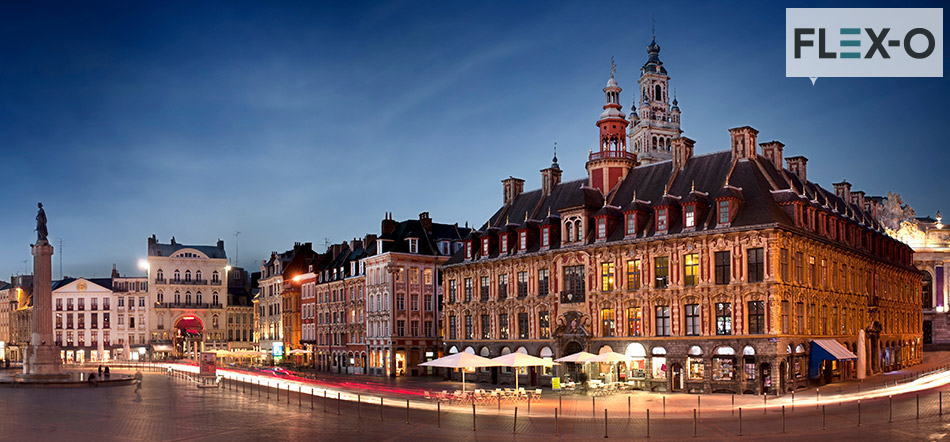
For a detailed overview of local markets, our guides to office leasing in Paris, Lyon Part-Dieu, and Lille Train Station highlight the unique characteristics of each business district.
Traditional lease, private office, or coworking space: Which option should you choose?
The Traditional Commercial Lease (3/6/9)
The 3/6/9 lease remains a viable option for an established organization that wants a fully customized layout and has a long-term outlook on its workforce. It allows the space to be fully customized to meet the organization’s security requirements. On the other hand, it involves a long-term commitment, a security deposit, and significant renovation work.
To help you decide based on your stage of development, we're comparing the two models side by side.
Read the comparison: 3/6/9-month lease vs. flexible office space
How much does an office cost for a financial services company?

For a detailed calculation that includes rent, utilities, and renovations, our comprehensive analysis breaks down each expense category.
Read the article: The True Cost of an Office for an Employee
Flex-O, a flexible office solution for the financial services industry
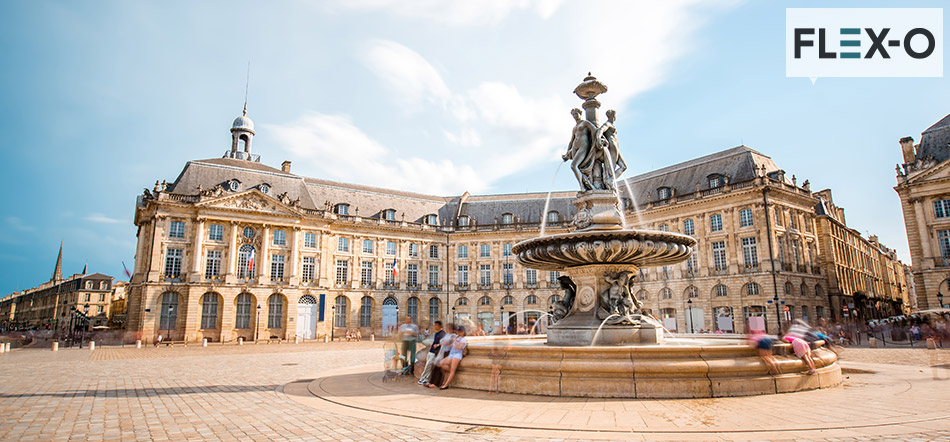
Flex-O offers private offices and coworking spaces in about ten French cities. Its centers are located, among other places, in Paris—on Boulevard Haussmann and Rue de Monceau, right in the heart of the Central Business District—as well as in Lyon, Lille, Bordeaux, and Rennes, often in the immediate vicinity of TGV stations.
The offering covers the sector’s main needs: private offices, shared private offices, fully equipped meeting rooms, and registered office services. For groups looking to open a regional branch without undertaking a construction project, the offering Corporate offers premium and flexible office spaces.
The buildings are BREEAM, HQE, or WELL certified, and Flex-O is a mission-driven company. This is particularly valuable for financial institutions committed to ESG initiatives.
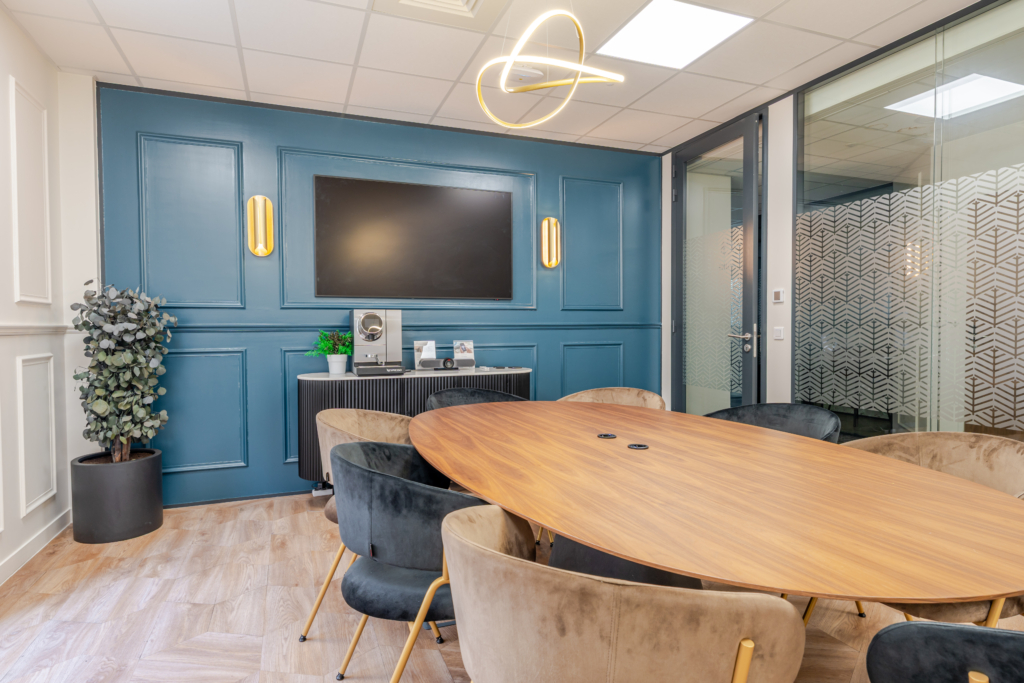
To find the location that best suits your business, view all available centers.
In conclusion: What kind of office space should financial services companies choose?
The choice of office space for financial services depends on striking a balance between image, confidentiality, technical reliability, and flexibility.
Private offices in flexible workspaces meet a wide range of needs: a fintech company that’s hiring quickly, a firm that wants a prestigious address without tying up its cash flow, or a large corporation opening a regional office or setting up a project team without undertaking a real estate development project. A traditional lease remains an option for organizations that prefer a fully customized layout, though this requires a longer-term commitment.
In any case, an on-site visit is essential. It allows you to verify the soundproofing, access control, and network configuration before committing.
To move on to the next step, explore all the Flex-O centers available throughout France.
FAQ
Is a coworking space suitable for a financial services company?
Yes, provided you choose a private, enclosed office rather than a workstation in an open-plan office. This option offers the privacy needed for meetings with clients, along with the flexibility of a short-term contract. Flex-O offers private offices at all of its locations in France.
What safety equipment should you check before renting an office in the financial sector?
As a priority, check the badge-based access control system, visitor reception procedures, soundproofing in offices and meeting rooms, and the quality and redundancy of the internet connection. The CNIL’s guide to personal data security includes a section on the protection of premises.
Where should you set up a financial consulting firm?
For corporate clients, a well-connected business district enhances credibility: the Central Business District in Paris, or the areas around TGV stations in the regions. For individual clients, proximity to customers matters more than the prestige of the address.
Does a fintech company need to sign a commercial lease?
Rarely in the early years. Headcount changes rapidly, and a 3/6/9 lease commits the tenant to a multi-year term with the tenant responsible for renovations. A private office in a flexible workspace allows the company to adjust its space as it hires new employees.
Does the tertiary decree apply to office tenants?
Yes. The program applies to both owners and tenants of commercial buildings larger than 1,000 m². The energy consumption reduction targets are set at 40% by 2030, 50% by 2040, and 60% by 2050.
Photo credits: Studio Romantic, Karo, Garun Studios – stock.adobe.com, Flex-O